Classical Mechanics
What Is the Center of Gravity in Physics?
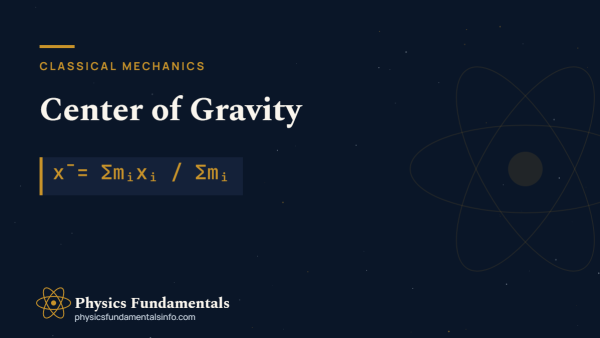
The center of gravity is the single point where an object's whole weight acts. Learn the formula, how to find it, and why things balance or topple — with worked examples.
17 min read
Classical mechanics: forces, energy, momentum and motion — Newton’s laws, work and energy, collisions, rotation and the everyday mechanics the rest of physics is built on.
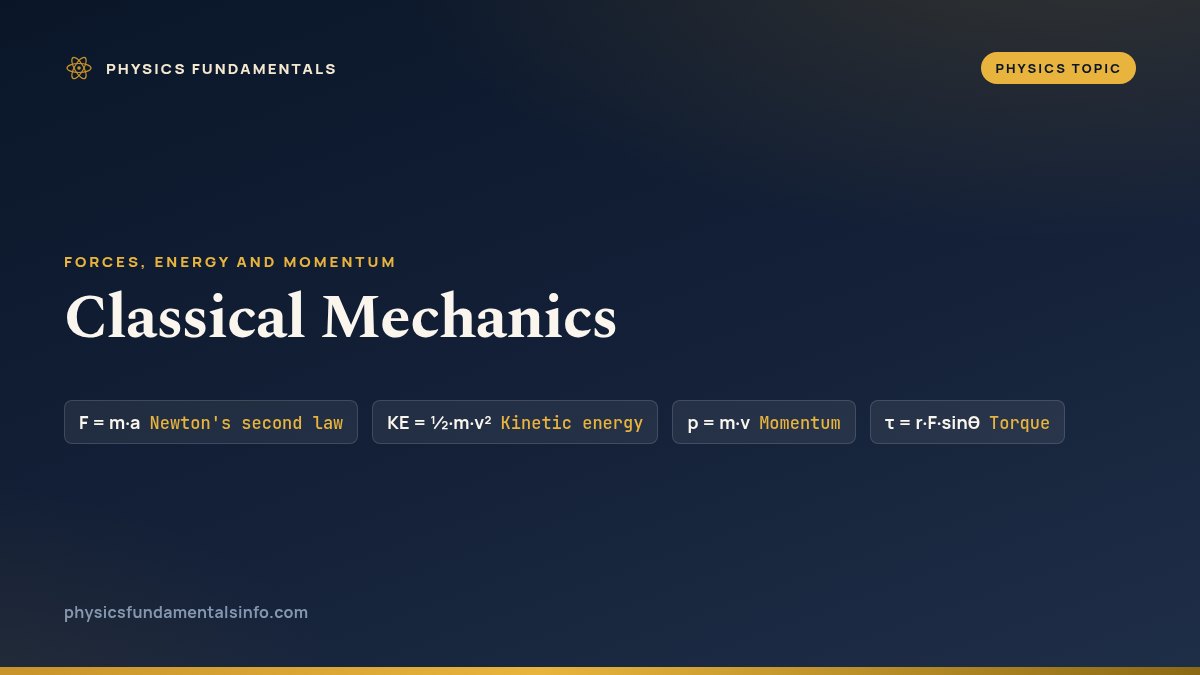
Classical Mechanics is the physics of why motion changes: the forces, energy and momentum that govern everything from a rolling ball to an orbiting satellite. Everything else in physics leans on it.
| Relationship | Equation | What it tells you |
|---|---|---|
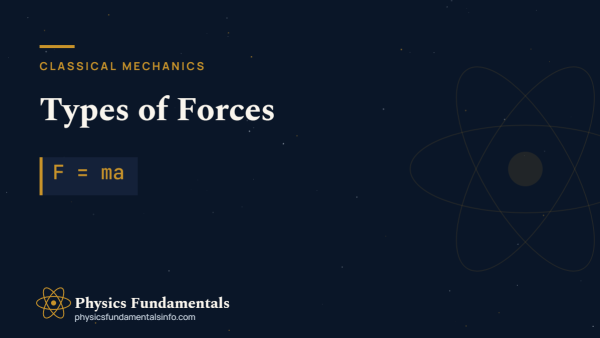
| Newton's second law | F = m·a | Net force, mass and acceleration |
| Work done | W = F·d·cosθ | Energy transferred by a force |
| Kinetic energy | KE = ½·m·v² | Energy of a moving mass |
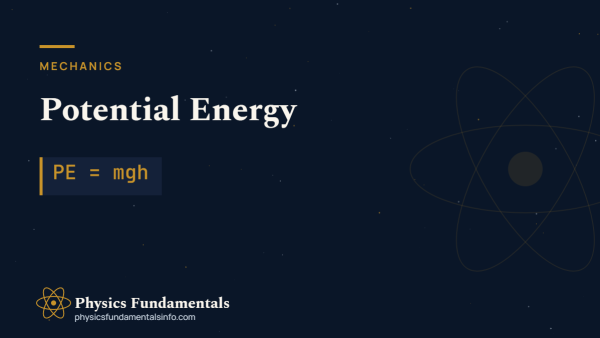
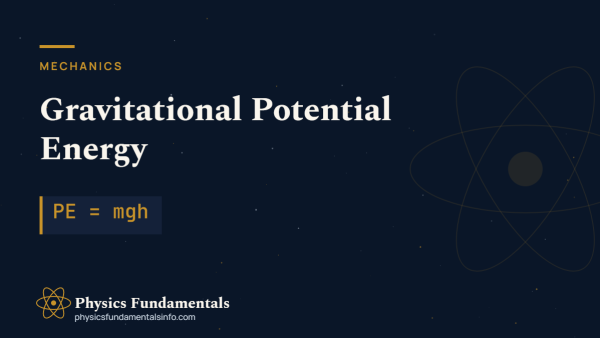
| Gravitational PE | PE = m·g·h | Energy stored by height |
| Momentum | p = m·v | Conserved in every collision |
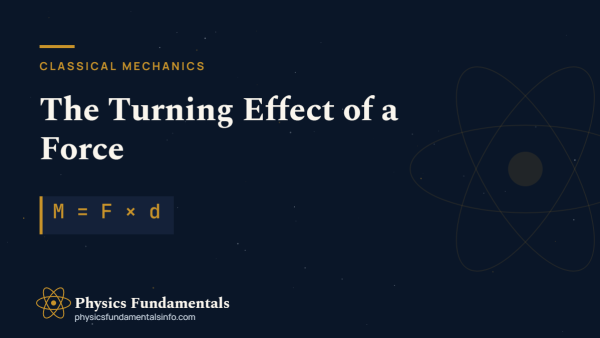
| Torque | τ = r·F·sinθ | Turning effect of a force |