Classical Mechanics
Escape Velocity Explained: Formula, Five Worlds and Worked Examples
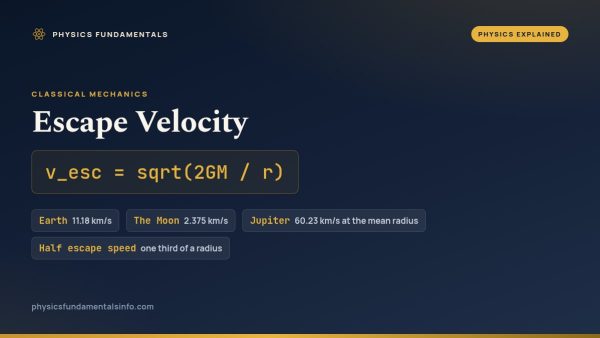
Escape velocity is the launch speed at which an unpowered object leaves a world for good: 11.18 km/s at Earth's surface, 2.375 km/s at the Moon's and 617.8 km/s at the Sun's. This page derives v = sqrt(2GM/r) from energy conservation, puts five worlds side by side against NASA's own published figures, shows why half the escape speed lifts a projectile only one third of a radius, and explains why no rocket ever has to reach 11.2 km/s. Seven worked problems, two original diagrams, an interactive lab and a calculator.
19 min read