Thermodynamics
Thermal Expansion Explained
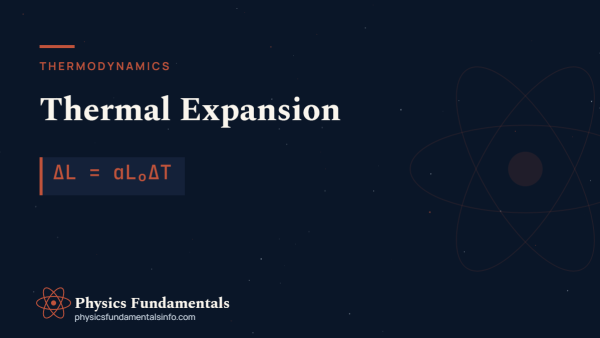
Why do bridges have gaps, and why is the Eiffel Tower taller in summer? Thermal expansion explained with the ΔL = αL₀ΔT formula, real coefficients, worked examples and an interactive lab.
13 min read
Thermodynamics: heat, temperature, entropy and energy transfer — the science of engines, refrigerators and the universe’s arrow of time.

Thermodynamics is the physics of heat, temperature and energy transfer in systems made of enormous numbers of particles — where entropy emerges from the statistics of countless tiny collisions.
| Relationship | Equation | What it tells you |
|---|---|---|
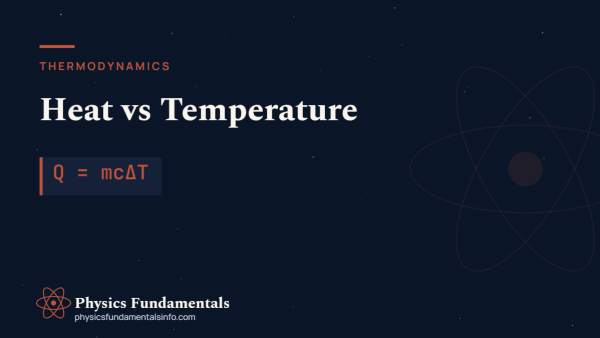
| Specific heat | Q = m·c·ΔT | Energy to change a temperature |
| Latent heat | Q = m·L | Energy to change a state |
| First law | ΔU = Q − W | Energy conservation for a gas |
| Ideal gas law | P·V = n·R·T | State of an ideal gas |
| Carnot efficiency | η = 1 − Tc / Th | Best possible heat-engine efficiency |
| Entropy change | ΔS = Q / T | Disorder gained in a reversible step |