The three main types of radiation physics identifies are alpha (α), beta (β) and gamma (γ), all emitted by unstable atomic nuclei. Alpha particles are helium nuclei stopped by paper; beta particles are fast electrons stopped by a few millimetres of aluminium; gamma rays are high-energy electromagnetic waves that even thick lead only reduces.
Look up for a moment. If there is a smoke alarm on your ceiling, a genuinely radioactive source — a speck of americium-241 smaller than a grain of salt — is probably sitting a few metres above your head right now, quietly firing out alpha particles. It has been doing so for years, and it is completely safe.
That is the strange charm of radioactivity. It is everywhere, yet the three kinds of radiation behave nothing like one another: one cannot get past your skin, one needs a sheet of metal, and one will sail through a brick wall. Knowing which is which is the whole game.
What Are the Types of Radiation in Physics?
The story starts in 1896, when Henri Becquerel found that uranium salts fogged photographic plates straight through their light-proof wrapping. Something invisible was streaming out of the atoms themselves — Marie and Pierre Curie soon named the phenomenon radioactivity.
Three years later, Ernest Rutherford sorted that mysterious output into two components by how easily each was absorbed, labelling them alpha and beta after the first letters of the Greek alphabet. In 1900 Paul Villard spotted a third, far more penetrating component, which Rutherford later christened gamma.
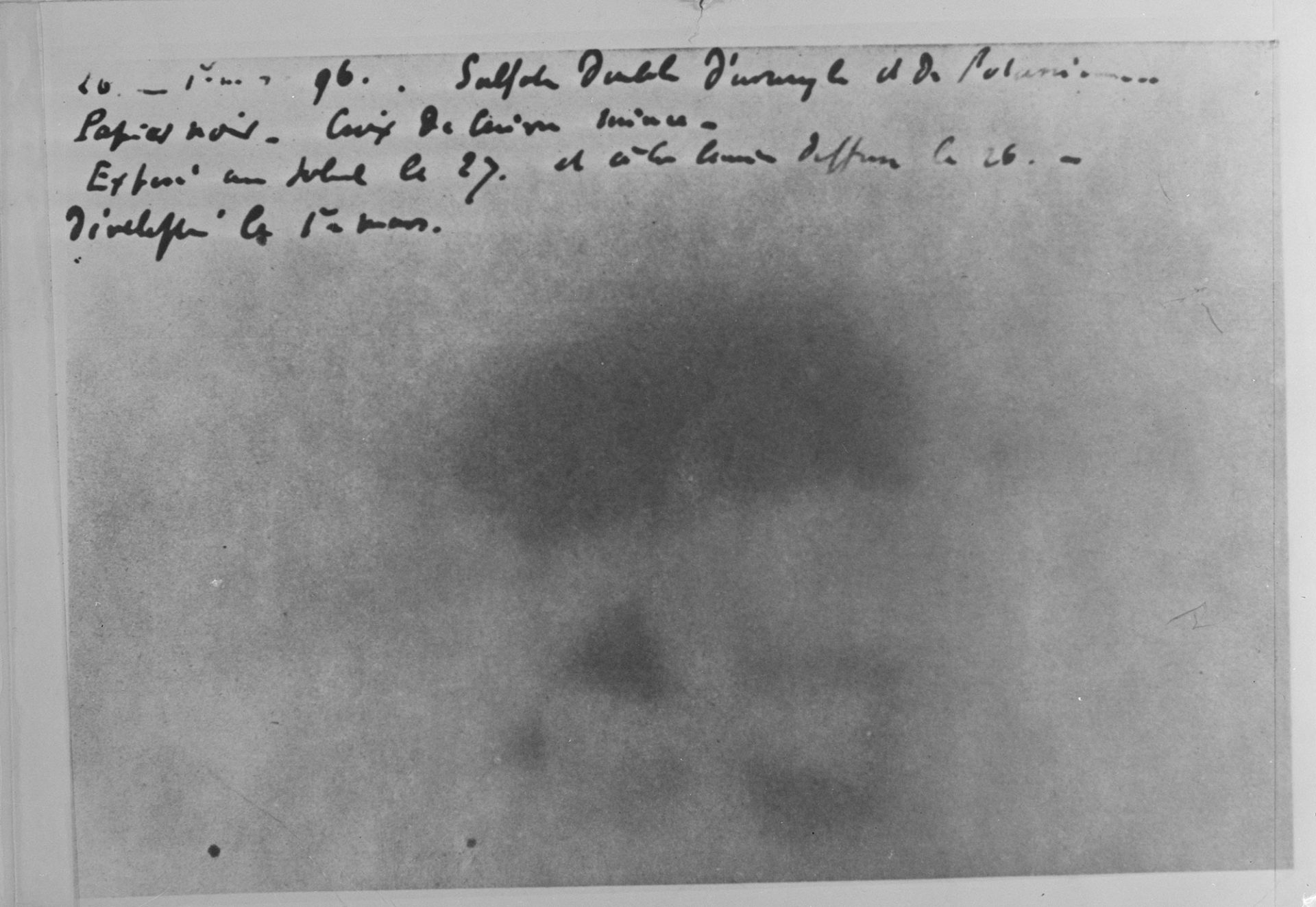
All three are forms of ionising radiation: they carry enough energy to knock electrons clean off the atoms they strike. That is precisely what makes them useful in medicine and industry — and hazardous to living tissue.
One caution about the vocabulary. Despite the historical name “rays”, only gamma is a true ray; alpha and beta are particles — physical lumps of matter flung out of a nucleus. (A fourth type, neutron radiation, appears in reactors and cosmic-ray showers, but natural decay overwhelmingly produces the classic trio.)
Alpha vs Beta vs Gamma: What Is the Difference?
Here is the pattern worth tattooing onto your revision notes: ionising power and penetrating power run in opposite directions. A particle that ionises furiously spends its energy budget within a short distance, so it cannot travel far; a weak ioniser spends slowly and keeps going.
Alpha sits at one extreme — a heavy, doubly charged bruiser that tears up everything nearby and exhausts itself within centimetres. Gamma sits at the other: an uncharged electromagnetic wave travelling at the speed of light and interacting so rarely that most of it passes straight through you. Beta lands in between.
| Property | Alpha (α) | Beta (β⁻) | Gamma (γ) |
|---|---|---|---|
| What it is | Helium-4 nucleus: 2 protons + 2 neutrons | A fast electron ejected from the nucleus | High-energy electromagnetic wave (photon) |
| Charge | +2e | −1e | 0 |
| Relative mass | ≈ 4 u (heaviest) | ≈ 1/1836 u (about 7,300× lighter than α) | Massless |
| Typical speed | ≈ 5% of the speed of light | Up to ≈ 99% of the speed of light | The speed of light |
| Ionising power | Very high | Moderate | Low |
| Penetrating power | Very low | Moderate | Very high |
| Stopped by | A sheet of paper, skin, or a few cm of air | ≈ 5 mm of aluminium | Reduced (never fully stopped) by several cm of lead or ≈ 1 m of concrete |
| Range in air | ≈ 3–5 cm | Up to a few metres | Very long — weakens with distance and shielding |
| Deflection in electric/magnetic fields | Small (heavy, charge +2) | Large, opposite direction (light, charge −1) | None (uncharged) |
Figure 1 — The classic absorber test: paper stops alpha, a few millimetres of aluminium stop beta, and thick lead only thins gamma out.
Electric and magnetic fields tell the same story from another angle. Alphas curve gently towards a negative plate, betas swing hard the opposite way because they are nearly 7,300 times lighter, and gamma rays plough straight on — no charge, no deflection.
The Radioactive Decay Formula
Which particular nucleus decays next? Nobody can say — not with any instrument, not even in principle. Yet a large sample is perfectly predictable, the way a stadium crowd is predictable even though each individual fan is not.
That statistical regularity is captured by the radioactive decay law:
- N — number of undecayed nuclei remaining (a pure count; no unit)
- N0 — number of nuclei at the start (no unit)
- λ — decay constant: the probability per second that any one nucleus decays (unit: s−1)
- t — elapsed time (unit: s)
- e — Euler’s number, approximately 2.718 (no unit)
Two companions follow directly. The half-life is the time for half of any sample to decay:
- t½ — half-life (SI unit: s, though minutes, days or years are common in practice)
And the activity is the number of decays per second, measured in becquerels:
- A — activity (unit: Bq, where 1 Bq = 1 decay per second = 1 s−1)
For exam work there is a friendlier halving form — no calculus, just repeated division:
A common student slip is mixing time units: if t½ is in years, t must be in years too, and λ comes out per year. Check the units before you reach for the exponential — or work any rearrangement instantly with our Half-Life Calculator.
Figure 2 — Exponential decay: whatever the starting amount, one half-life leaves 50%, two leave 25%, three leave 12.5%.
Want to feel how stubborn that curve is? Drag the numbers around yourself:
How Radioactive Decay Works
Every nucleus is a tug-of-war. The strong nuclear force glues protons and neutrons together, while the electrostatic repulsion described by Coulomb’s law shoves the positively charged protons apart.
In most nuclei the glue wins and nothing ever happens. But make a nucleus too big, or skew its neutron-to-proton ratio, and it becomes unstable — sooner or later it rearranges itself and hurls the excess energy out as radiation.
Writing the equations is pure bookkeeping, governed by two rules: the mass number A (top) and the atomic number Z (bottom) must each balance across the arrow.
Alpha decay: shedding a chunk
Very heavy nuclei slim down by ejecting a tightly bound package of two protons and two neutrons — a helium-4 nucleus. Uranium-238 is the textbook case:
Check the books: 238 = 234 + 4 on top, and 92 = 90 + 2 on the bottom. Balanced.
Because momentum is conserved, the daughter nucleus recoils like a fired rifle as the alpha leaves. And since kinetic energy scales as p²/2m for a fixed momentum, the lightweight alpha carries away almost all of the released energy — typically 4–9 MeV.
Beta-minus decay: a neutron changes sides
When a nucleus holds too many neutrons, one of them transforms into a proton, an electron and an antineutrino (ν̄):
The electron — the beta particle — is created in that instant and ejected at once. It was never orbiting the atom. Carbon-14 shows the effect on the whole nucleus:
The mass number holds at 14 while the atomic number climbs by one: carbon quietly becomes nitrogen. (A mirror process, beta-plus, converts a proton into a neutron and emits a positron — the trick behind PET scans.)
Why the antineutrino? Measured beta particles emerge with a spread of energies rather than one fixed value, so a second, invisible particle must be sharing the payout. Wolfgang Pauli proposed it in 1930 as a “desperate remedy”; it took 26 years to detect one.
Gamma emission: the nucleus rings like a bell
Gamma decay creates no new element. After an alpha or beta decay, the daughter nucleus is often left jangling in an excited state, and it settles by emitting a photon — the same physics as an atom emitting light, but roughly a million times more energetic.
The asterisk marks the excited state. Cobalt-60’s nickel daughter sheds its excitement as two gamma photons of 1.17 and 1.33 MeV — the workhorses of industrial sterilisation.
Real-World Examples of the Three Types of Radiation
1. Smoke detectors — alpha (americium-241)
Inside an ionisation smoke alarm, a fraction of a microgram of americium-241 ionises the air between two charged plates, driving a tiny steady current. Smoke particles soak up the ions, the current sags, and the alarm screams.
Alpha is the perfect choice precisely because it is so feeble a traveller: the particles cannot escape the plastic casing, and with a 432-year half-life the source outlives the detector many times over.
2. Radon in homes — alpha (radon-222)
Uranium in ordinary rock decays step by step into radium and then radon-222, a gas with a 3.8-day half-life that seeps up into buildings. Breathe it in, and its alpha decays happen directly against lung tissue.
The World Health Organization ranks radon as a leading cause of lung cancer, second only to smoking in many countries. For most people it is also the largest single slice of natural radiation dose — and the cheapest to reduce, starting with a simple home test.
3. Radiocarbon dating — beta (carbon-14)
Cosmic rays constantly forge fresh carbon-14 high in the atmosphere, and every living thing absorbs it. Death stops the intake, so the beta-decaying carbon-14 (half-life 5,730 years) begins a slow countdown that archaeologists can read, reliable back to roughly 50,000 years.
4. Thickness gauges — beta (strontium-90)
Paper, foil and plastic-film factories park a beta source on one side of the moving sheet and a detector on the other. Thicker sheet, fewer betas arriving — and the count rate steers the rollers in real time.
Beta suits the job because it is neither too soft nor too hard: alpha would never reach the detector, and gamma would barely notice the sheet at all.
5. Nuclear medicine — gamma (technetium-99m and cobalt-60)
Technetium-99m, injected for tens of millions of scans every year, emits a clean 140 keV gamma that cameras track from outside the body — and its 6-hour half-life means it is largely gone by the next day. Cobalt-60’s harder gammas sterilise surgical instruments and treat tumours.
Notice the logic: only gamma escapes the body to be photographed, which is exactly why imaging relies on gamma emitters rather than alpha or beta.
Common Misconceptions About Radiation
“Alpha is the harmless one”
Outside the body, nearly true — dead skin stops it. Inside, alpha is by far the most damaging: it dumps all its energy into a few cells, which is why radiation protection weights an alpha dose 20 times more heavily than the same absorbed dose of beta or gamma.
The least penetrating type of radiation is the most dangerous one to inhale. That inversion is the single most examined idea on this topic — and the reason radon matters.
“Things exposed to radiation become radioactive”
Being irradiated is not the same as being contaminated. Gamma-sterilised food and instruments are no more radioactive afterwards than you are after a dental X-ray; the hazard only transfers when radioactive material itself sticks to or gets inside something.
“Radiation is a man-made problem”
Rocks, soil, cosmic rays, brazil nuts and bananas are all mildly radioactive — and so are you, with several thousand potassium-40 nuclei decaying inside your body every second, as they always have. Artificial sources merely add to a natural background that life evolved within.
“Gamma rays and X-rays are different kinds of radiation”
Physically they are the same thing: high-energy photons. The label records the birthplace, not the nature — gamma rays come from the nucleus, X-rays from electron transitions or machines — and their energy ranges overlap.
How Radioactivity Connects to the Rest of Physics
Where does the energy come from? Weigh the products of a decay and they come up slightly lighter than the parent; the missing mass has become kinetic energy through E = mc², the exchange rate at the heart of special relativity.
Gamma rays also stitch nuclear physics to optics. They are simply the extreme top of the electromagnetic spectrum, with a frequency around a million times that of visible light — roughly 1019 to 1021 Hz.
And the decay law itself is a pattern you will meet again and again: capacitor discharge, damping, the cooling of your coffee. Nature reuses the exponential wherever a quantity’s rate of change is proportional to the quantity itself.
Worked Problems
These climb from equation-balancing to full decay-law calculations. Cover the solutions and attempt each one first.
Show Solution
Solution:
Step 1: Alpha decay removes a helium-4 nucleus, so conserve the mass number: A = 210 − 4 = 206.
Step 2: Conserve the atomic number: Z = 84 − 2 = 82, which is lead (Pb).
Step 3: Write the balanced equation: 21084Po → 20682Pb + 42He.
Answer: The daughter is lead-206, with 210 = 206 + 4 and 84 = 82 + 2 both balanced.
Show Solution
Solution:
Step 1: In β⁻ decay a neutron becomes a proton, so A stays at 32 while Z rises by one: Z = 15 + 1 = 16 (sulfur).
Step 2: Add the emitted electron and an antineutrino: 3215P → 3216S + 0−1e + ν̄.
Step 3: Check: mass numbers 32 = 32 + 0; atomic numbers 15 = 16 + (−1). Balanced.
Answer: 3215P → 3216S + 0−1e + ν̄
Show Solution
Solution:
Step 1: Passing through paper rules out alpha, which paper stops.
Step 2: Being stopped by a few millimetres of aluminium rules out gamma, which such a sheet would barely weaken.
Step 3: Deflection towards the positive plate means the particles carry negative charge — an electron’s signature.
Answer: Beta-minus (β⁻) radiation.
Show Solution
Solution:
Step 1: Count the half-lives: n = t / t½ = 12 days ÷ 3.0 days = 4.
Step 2: Halve four times: A = 8,000 Bq × (½)4 = 8,000 Bq ÷ 16.
Step 3: A = 500 Bq.
Answer: 500 Bq.
Show Solution
Solution:
Step 1 (a): λ = ln 2 / t½ = 0.6931 / 5,730 y = 1.21 × 10⁻⁴ y−1.
Step 2 (b): λt = (1.21 × 10⁻⁴ y−1)(2,000 y) = 0.242 — dimensionless, as an exponent must be.
Step 3: N/N0 = e−0.242 = 0.785.
Answer: (a) λ ≈ 1.21 × 10⁻⁴ y⁻¹; (b) about 78.5% of the sample remains.
Show Solution
Solution:
Step 1: Convert the half-life to seconds: t½ = 28.8 y × 3.156 × 107 s/y = 9.09 × 10⁸ s.
Step 2: λ = ln 2 / t½ = 0.6931 / (9.09 × 10⁸ s) = 7.63 × 10⁻¹⁰ s−1.
Step 3: A = λN = (7.63 × 10⁻¹⁰ s−1)(3.0 × 10¹⁶) = 2.3 × 10⁷ Bq.
Sanity check: 23 million decays per second sounds enormous, yet those 3.0 × 10¹⁶ atoms weigh only about 4.5 micrograms — huge activities from tiny masses are the norm in nuclear physics.
Answer: A ≈ 2.3 × 10⁷ Bq (23 MBq).
Show Solution
Solution:
Step 1: Start from N = N0e−λt and rearrange for time: t = ln(N0/N) / λ.
Step 2: λ = ln 2 / 5,730 y = 1.2097 × 10⁻⁴ y−1, and ln(N0/N) = ln(1 / 0.600) = 0.5108.
Step 3: t = 0.5108 / (1.2097 × 10⁻⁴ y−1) = 4,223 y.
Answer: The bone is roughly 4,200 years old (4.22 × 10³ years to 3 s.f.).
Frequently Asked Questions
What are the 3 main types of radiation in physics?
The three main types are alpha particles (helium nuclei), beta particles (fast electrons) and gamma rays (high-energy electromagnetic waves), all emitted by unstable nuclei. They differ most sharply in penetration: paper stops alpha, a few millimetres of aluminium stops beta, and only thick lead or concrete substantially reduces gamma.
Which type of radiation is the most dangerous?
It depends on where the source is. Outside the body, gamma is the main threat because it penetrates deep into tissue, while skin blocks alpha entirely. Inside the body the ranking flips: an inhaled or swallowed alpha emitter is the most damaging, because each alpha dumps all its energy into a few cells — radiation protection weights it 20 times more heavily than beta or gamma.
Are gamma rays and X-rays the same thing?
Physically, yes — both are high-energy photons, and their energy ranges overlap. The names record origin rather than nature: gamma rays are emitted by atomic nuclei, whereas X-rays come from electron transitions or X-ray machines. A photon of a given energy behaves identically whichever label it carries.
Can gamma radiation be stopped completely?
No — gamma intensity falls exponentially with shielding thickness, so it is reduced rather than switched off. Each halving thickness (roughly a centimetre of lead for typical MeV gamma rays) cuts the intensity by 50%, and stacking enough of them makes what remains negligible for any practical purpose, though never mathematically zero.
Why do smoke detectors use alpha radiation?
Because alpha ionises air superbly yet travels almost nowhere. The americium-241 source keeps a tiny ion current flowing inside the detection chamber; smoke absorbs the ions, and the drop in current triggers the alarm. The alpha particles cannot penetrate the plastic casing, so an intact detector poses no radiation hazard in normal use.
Is anything in my home naturally radioactive?
Yes — granite worktops, bananas and brazil nuts (potassium-40), smoke alarms, and even your own body, where thousands of nuclei decay every second. These doses are trivially small. The one household source worth acting on is radon gas seeping from the ground, which is cheap to test for and to fix.