Nuclear Physics
Beta Decay Explained
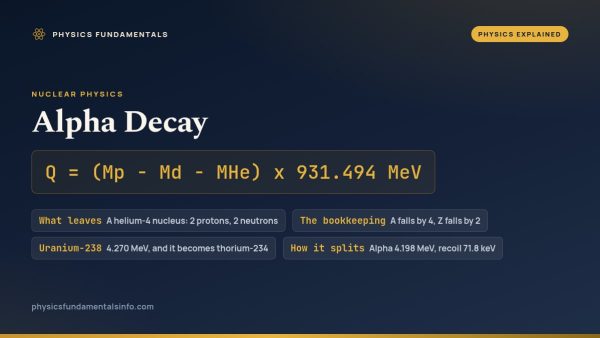
Beta decay turns a neutron into a proton (or a proton into a neutron), emitting an electron or positron plus a neutrino. Here are the three types, the formulas and worked examples.
15 min read
Nuclear physics: inside the atomic nucleus — radioactivity, half-life, binding energy, and the fission and fusion reactions that power stars and reactors.

Nuclear Physics is the study of the nucleus: what holds it together, how it comes apart, and how much energy that releases. It is where a milligram of matter turns into the output of a power station.
| Relationship | Equation | What it tells you |
|---|---|---|
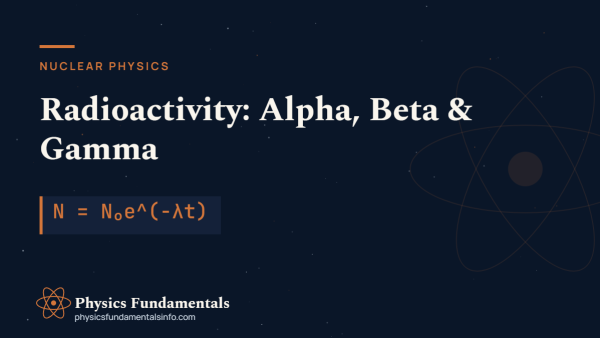
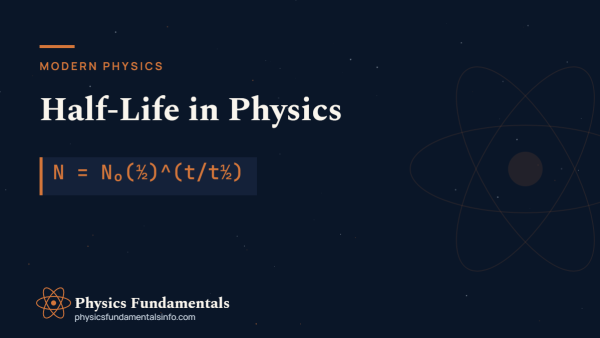
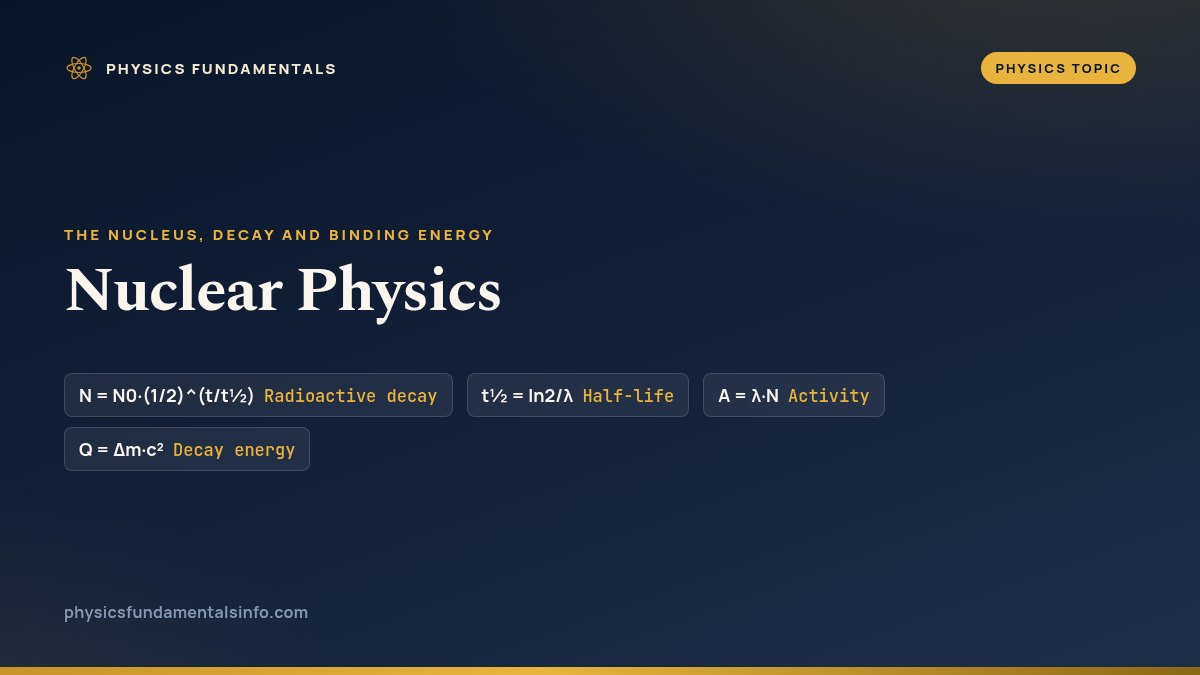
| Radioactive decay | N = N0 · (1/2)^(t / t½) | How many nuclei are left after time t |
| Half-life | t½ = ln2 / λ | Time for half the sample to decay |
| Activity | A = λ · N | Decays per second |
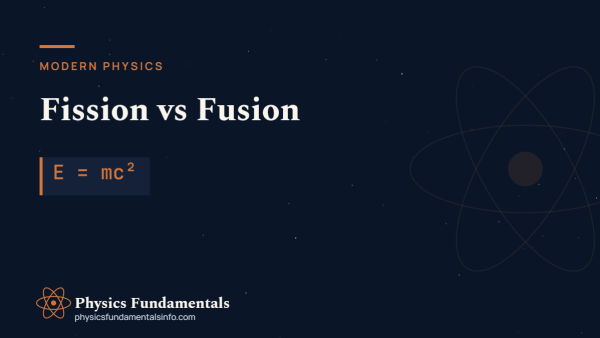
| Decay energy | Q = Δm · c² | Energy released by a mass defect |
| Binding energy | E = Δm · c² | Energy holding the nucleus together |
| Attenuation | I = I0 · e^(−μ·x) | Gamma intensity through shielding |