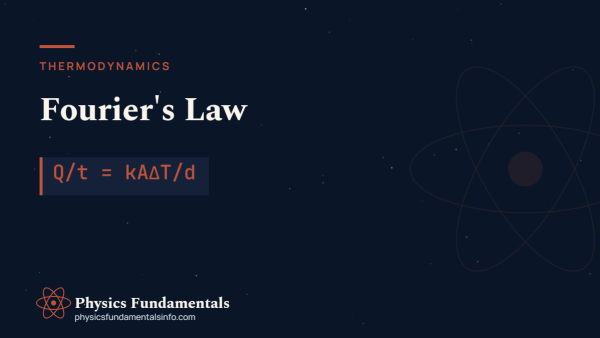
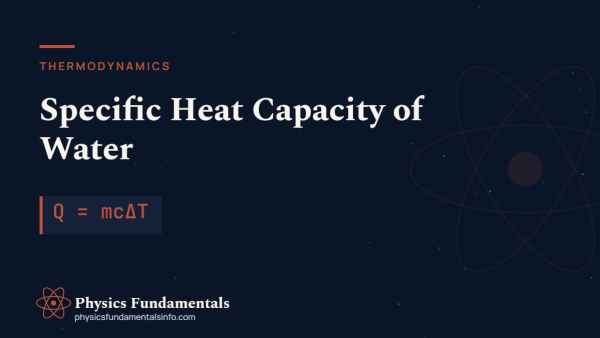
The laws of thermodynamics are four fundamental principles that govern how energy and heat behave in any physical system. The zeroth law defines temperature, the first law states energy is conserved, the second law says entropy always increases, and the third law shows absolute zero can never be fully reached.
Pour a hot coffee and walk away. Come back and it is lukewarm — never hotter. That one stubborn fact, that heat always drifts from hot to cold and never the other way on its own, is one of the deepest rules in all of physics.
The laws of thermodynamics are those rules. They explain why engines can never be perfect, why ice melts in your hand, why time seems to run in one direction, and why the Universe itself is slowly winding down. Learn four short statements and an enormous slice of physics clicks into place.
What Are the Laws of Thermodynamics?
Thermodynamics is the physics of heat, energy and work — how energy moves around and changes form. The laws of thermodynamics are the four rules that every energy transfer in the Universe has to obey, from a kettle boiling to a star burning.
There are four of them, numbered from zero to three. The odd numbering is a historical accident: the “zeroth” law was recognised as more basic than the others only after the first, second and third had already been named.
Here is the whole framework in one glance before we unpack each law.
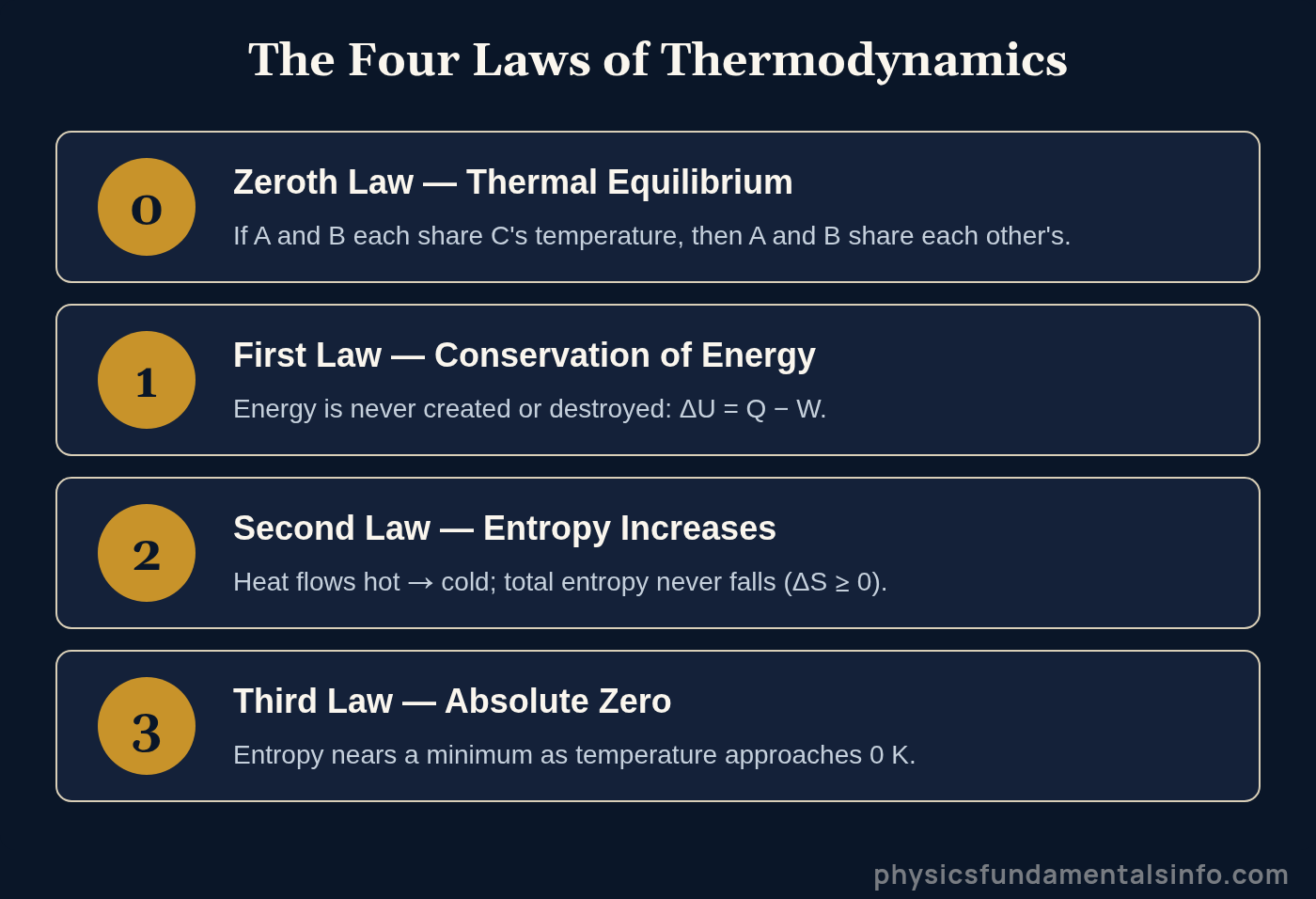
The four laws, from the temperature-defining zeroth law to the unreachable absolute zero of the third.
Each law introduces one big idea: temperature, internal energy, entropy and an absolute floor of cold. The table below is your map for the rest of the article.
| Law | What it says | Key formula | What it introduces |
|---|---|---|---|
| Zeroth | Two systems each in thermal equilibrium with a third are in equilibrium with each other. | (qualitative) | Temperature |
| First | Energy cannot be created or destroyed, only converted or transferred. | ΔU = Q − W | Internal energy |
| Second | The total entropy of an isolated system never decreases; heat flows hot to cold. | ΔS ≥ 0; η = 1 − T_c/T_h | Entropy |
| Third | As temperature approaches absolute zero, entropy approaches a constant minimum. | S = k_B ln Ω | Absolute zero |
NASA’s engineers lean on exactly these principles to design jet and rocket propulsion; you can read their plain-language tour in NASA’s overview of thermodynamics. Now let us take the laws one at a time.
The Zeroth Law of Thermodynamics: Thermal Equilibrium
Start with the most ordinary idea imaginable: things at the same temperature, left touching, stay that way.
The zeroth law states that if two systems are each in thermal equilibrium with a third, then they are in thermal equilibrium with each other. In plain terms — if A is as hot as C, and B is as hot as C, then A and B are as hot as each other.
Why does that deserve a law? Because it is what makes a thermometer trustworthy. The mercury or digital probe is your “third system.” When it reads the same value against two objects, those objects share a temperature.
This is also where temperature earns its meaning as a real, comparable property — not just a feeling of hot or cold. For the distinction between heat and temperature, which trips up almost everyone, see our guide to the difference between heat and temperature.
The First Law of Thermodynamics: Energy Is Conserved
The first law is the famous one: energy cannot be created or destroyed, only converted from one form to another or moved from one place to another. The total energy of an isolated system never changes.
For a system that exchanges heat and work with its surroundings, the bookkeeping looks like this:
- ΔU — change in the system’s internal energy, in joules (J)
- Q — heat added to the system, in joules (J)
- W — work done by the system, in joules (J)
Read it as a budget. Pour heat in (Q positive) and you raise the internal energy. Let the system push on its surroundings — a gas shoving a piston — and that work (W) spends some of the budget straight back out.
A common student slip is the sign of W. In the physics convention used here, W is work done by the system, so it carries a minus sign. If 800 J of work is done on a gas instead, W is −800 J, and the internal energy rises rather than falls.
The first law is really conservation of energy wearing thermodynamic clothes. If the broader idea of energy and its forms feels fuzzy, our explainer on what energy is in physics builds the foundation.
The Second Law of Thermodynamics: Entropy and the Arrow of Time
The first law says you cannot win — you cannot get more energy out than you put in. The second law says you cannot even break even. Some energy always degrades into a less useful form.
Its core statement: the total entropy of an isolated system never decreases. Entropy rises for any real, irreversible process and stays constant only for an idealised reversible one.
- ΔS — change in entropy, in joules per kelvin (J/K)
- Entropy is, loosely, a measure of disorder — or more precisely, a count of the microscopic ways a system can be arranged
Entropy is why heat flows hot to cold and never the reverse by itself. Spread-out energy has vastly more possible arrangements than concentrated energy, so systems drift towards the spread-out state. That one-way drift is what we experience as the “arrow of time.”
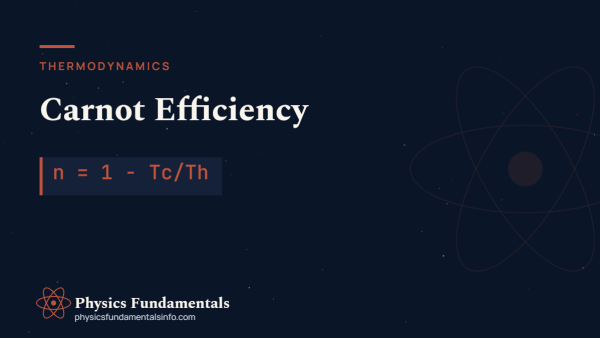
The second law also caps every engine. No heat engine can turn all its heat into work; some must always be dumped to a colder reservoir. The best possible efficiency depends only on the two temperatures:
- η — maximum (Carnot) efficiency, a dimensionless fraction
- T_c — absolute temperature of the cold reservoir, in kelvin (K)
- T_h — absolute temperature of the hot reservoir, in kelvin (K)
Notice the consequence: efficiency hits 100% only if T_c is 0 K, which the third law forbids. So a real car engine running near 40% is actually doing rather well.
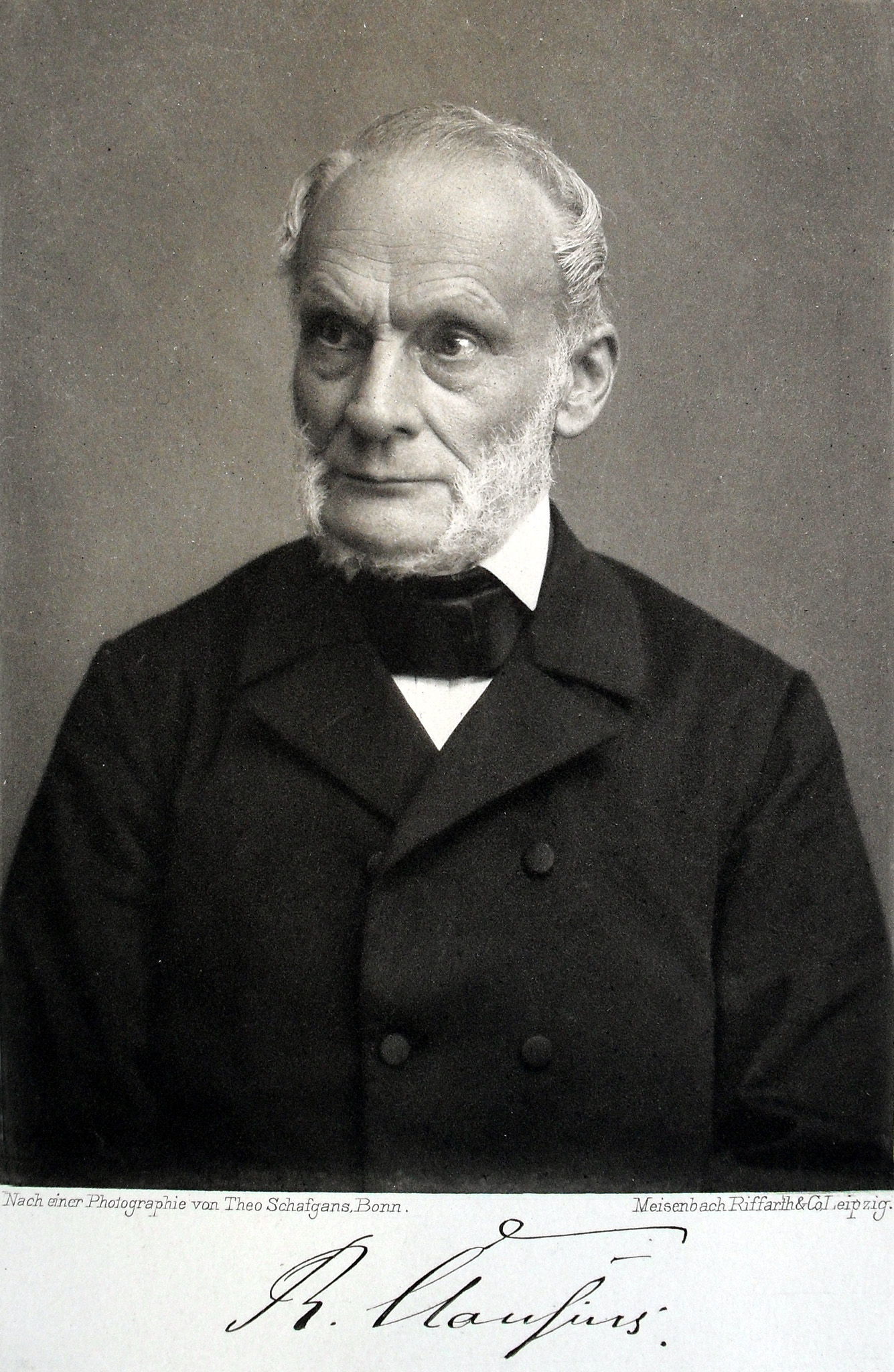
The German physicist Rudolf Clausius gave entropy its name in the 1860s and stated the second law in its modern form. To explore how entropy connects to the random motion of molecules, our piece on kinetic energy is a natural next step.
The Third Law of Thermodynamics: Absolute Zero
The third law turns to the coldest extreme. As the temperature of a system approaches absolute zero, its entropy approaches a constant minimum value — exactly zero for a perfect crystal.
At the microscopic level, entropy counts arrangements. Cool a perfect crystal all the way down and there is just one way to arrange it: every atom sitting in its lowest energy state. One arrangement means zero entropy.
- S — entropy, in joules per kelvin (J/K)
- k_B — Boltzmann constant = 1.380649 × 10⁻²³ J/K
- Ω — number of microscopic states available to the system (dimensionless)
There is a catch with real consequences: you can never actually reach absolute zero. Each cooling step removes only a fraction of the energy that remains, so it would take infinitely many steps. Absolute zero is a limit you approach, never a temperature you touch.
Absolute zero sits at 0 K, which is −273.15 °C (−459.67 °F). That floor is so fundamental that the kelvin scale itself is now defined through the Boltzmann constant — see NIST’s explanation of the Boltzmann constant.
How the Laws of Thermodynamics Work Together
The four laws are not separate trivia; they interlock. The zeroth hands you a temperature to measure. The first tracks the energy. The second sets the direction. The third anchors the cold end of the scale.
A heat engine shows all of this at once. Heat Q_h flows in from a hot source; the engine converts part of it into useful work W; the rest, Q_c, is dumped to a cold sink.
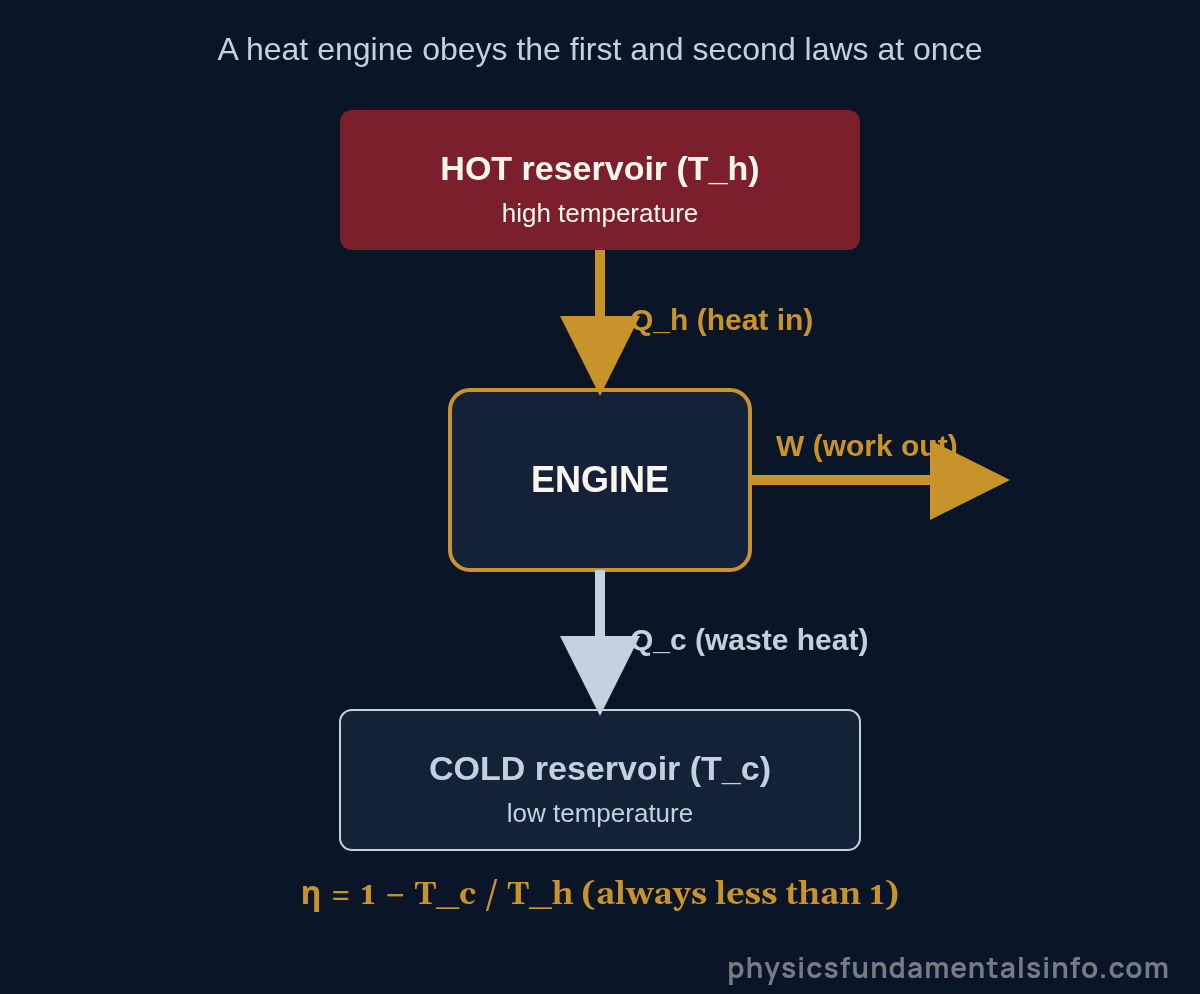
Energy in equals work out plus waste heat (first law); some heat must always go to the cold reservoir (second law), so efficiency stays below 100%.
The first law demands Q_h = W + Q_c — energy balances exactly. The second law demands Q_c be greater than zero — you cannot dump nothing. Together they explain why no engine, however clever, is ever perfectly efficient.
Try it yourself. In the interactive lab below, change the hot and cold temperatures and the heat supplied, then watch the maximum work, the waste heat and the entropy generated update live.
Real-World Examples of the Laws of Thermodynamics
These laws are not abstract. You bump into them every single day.
Your refrigerator
A fridge moves heat from cold food into the warm kitchen — the “wrong” way for the second law. It manages this only by doing work with its compressor, paid for in electricity. Heat never flows uphill for free.
A car or jet engine
Burn fuel, make a hot gas, extract work to turn the wheels, then blow the rest out of the exhaust as waste heat. That is the heat-engine picture exactly, and the second law is why your engine runs hot and your fuel economy is capped.
A melting ice cube
Leave ice on the worktop and heat flows from the warmer room into it until everything reaches a single temperature — the zeroth and second laws working in tandem. A neat crystal becomes disordered liquid, so entropy rises.
Your own body
You eat chemical energy and convert it into motion and heat, never conjuring energy from nothing — that is the first law running your metabolism. The warmth you constantly radiate is energy degrading, just as the second law predicts.
The fate of the Universe
Stretch the second law to the largest scale and you get the “heat death”: over unimaginable spans of time, energy spreads out evenly until no useful work can be extracted anywhere. A sobering idea from four short rules.
Common Misconceptions About the Laws of Thermodynamics
“The second law means everything always becomes more disordered”
Locally, order can grow — a freezer makes ice, a plant builds itself from sunlight and air. The law only forbids the total entropy of an isolated system from falling. Local order is always paid for with a bigger disorder increase somewhere else.
“Energy gets used up”
Energy is never destroyed (first law). What runs out is useful, concentrated energy. When you “use” energy you are really degrading it into spread-out heat that is far harder to harness again.
“You can build a perfectly efficient engine”
You cannot. The second law caps efficiency at 1 − T_c/T_h, and reaching 100% would need a cold reservoir at absolute zero — which the third law rules out. Any machine claiming 100% or more is a perpetual-motion myth.
“Cold flows into warm objects”
There is no such thing as “cold” flowing. Cold is simply the absence of heat. Heat — energy — always moves from the hotter object to the cooler one; the cooler object warms because it is gaining energy, not losing “coldness.”
How Thermodynamics Relates to Energy, Heat and Temperature
The laws of thermodynamics sit on top of a few simpler ideas worth having straight.
Temperature measures the average kinetic energy of a substance’s particles. Heat is the energy that flows because of a temperature difference. They are not the same thing, and treating them as one is the classic beginner’s error.
How much a material heats up for a given amount of energy depends on its specific heat capacity — the reason dry sand scorches your feet while the sea beside it stays cool.
The first law, meanwhile, is just conservation of energy applied to heat and work. Get these building blocks straight and the four laws stop feeling like rules to memorise — they start to feel inevitable.
Worked Problems
Show Solution
Step 1 — Use the first law: ΔU = Q − W.
Step 2 — Substitute, keeping units. Heat is added, so Q = +500 J; the gas does work, so W = +200 J. ΔU = 500 J − 200 J.
Step 3 — Solve: ΔU = 300 J.
Answer: ΔU = +300 J (the internal energy rises by 300 J).Show Solution
Step 1 — First law: ΔU = Q − W, where Q is heat added to the gas and W is work done by the gas.
Step 2 — Fix the signs. Heat is released, so Q = −300 J. Work is done on the gas, so the work done by the gas is W = −800 J.
Step 3 — Substitute and solve: ΔU = (−300 J) − (−800 J) = −300 J + 800 J = 500 J.
Answer: ΔU = +500 J (compressing the gas raises its internal energy).Show Solution
Step 1 — For reversible heat transfer at constant temperature, ΔS = Q_rev / T.
Step 2 — Substitute with units: Q_rev = 600 J, T = 300 K, so ΔS = 600 J / 300 K.
Step 3 — Solve: ΔS = 2.0 J/K.
Answer: ΔS = +2.0 J/K.Show Solution
Step 1 — Find each reservoir’s entropy change with ΔS = Q / T. The hot one loses heat; the cold one gains it.
Step 2 — Hot reservoir: ΔS_hot = −900 J / 450 K = −2.0 J/K. Cold reservoir: ΔS_cold = +900 J / 300 K = +3.0 J/K.
Step 3 — Add them: ΔS_total = −2.0 + 3.0 = +1.0 J/K.
Answer: ΔS_total = +1.0 J/K. It is positive, so the process obeys the second law — total entropy rises even though the hot reservoir’s entropy falls.Show Solution
Step 1 — Maximum efficiency is the Carnot efficiency: η = 1 − T_c / T_h.
Step 2 — Substitute the absolute temperatures: η = 1 − (300 K / 500 K) = 1 − 0.60.
Step 3 — Solve: η = 0.40.
Answer: η = 0.40, or 40%. No real engine between these temperatures can beat this.Show Solution
Step 1 — Maximum work uses the Carnot efficiency from Problem 5: W = η × Q_h, with η = 0.40.
Step 2 — Substitute: W = 0.40 × 1500 J = 600 J.
Step 3 — Apply the first law (energy balance) for the rejected heat: Q_c = Q_h − W = 1500 J − 600 J = 900 J.
Answer: maximum work W = 600 J; heat rejected Q_c = 900 J.Show Solution
Step 1 — For a Carnot refrigerator, the coefficient of performance is COP = T_c / (T_h − T_c).
Step 2 — Substitute: T_c = 270 K, T_h = 300 K, so COP = 270 / (300 − 270) = 270 / 30.
Step 3 — Solve: COP = 9.0.
Answer: COP = 9.0. Ideally, every 1 J of electrical work moves 9 J of heat out of the fridge.Show Solution
Step 1 — For an ideal gas at constant temperature, internal energy depends only on temperature, so ΔU = 0.
Step 2 — First law: ΔU = Q − W, so 0 = 1200 J − W, giving W = 1200 J. That settles (a) and (b): W = 1200 J and ΔU = 0 J.
Step 3 — Entropy change at constant temperature: ΔS = Q_rev / T = 1200 J / 400 K = 3.0 J/K.
Answer: (a) W = 1200 J; (b) ΔU = 0 J; (c) ΔS = +3.0 J/K.